

Table of contents
KYI: The Trust Layer Powering Verified Invoicing and Sustainable Real Yield in the UAE
February 12, 2026

In the world of invoice financing and decentralized finance (DeFi), the missing piece has always been trust!
How do lenders know an invoice is genuine?
How do investors know a receivable hasn’t already been financed?
How do financiers ensure they are funding real transactions rather than accounting artifacts?
These questions sit at the core of invoice-based financing, and when they go unanswered, the consequences can be systemic.
When Receivables Can’t Be Verified: A Real-World Example
The risks around unverified receivables are not theoretical.
In early 2020, NMC Healthcare, once one of the largest healthcare providers in the UAE, collapsed after major accounting issues were uncovered. Investigations found overstated revenues, unsupported receivables, and hidden liabilities that did not reflect the group’s true financial position.
A key issue was trust in reported receivables. Some receivables could not be clearly verified against real underlying transactions, yet they played a role in credit decisions and financing across the group. When questions emerged around the accuracy of this data, confidence dropped quickly.
As trust weakened, lenders reassessed risk, funding tightened, and the business unraveled, leading to billions of dollars in losses for creditors and investors.
For many financial institutions, the takeaway was simple: when receivables cannot be independently verified, they can become a hidden source of risk, even in large and established companies. This led to more cautious underwriting, higher risk premiums, and slower capital deployment against receivables.
This is exactly the problem KYI (Know Your Invoice) was designed to solve.
KYI enables receivables to be verified against real underlying activity before they are used for financing. This verification layer powers DeFa by InvoiceMate, turning verified receivables into transparent, on-chain, yield-bearing assets.
Because capital moves faster and safer when receivables can be trusted.
What is KYI and How It Reinforces Trust in Invoice Financing
KYI stands for Know Your Invoice. It is a specialized verification service designed specifically for invoice-based financing. While many financial platforms rely on KYC (Know Your Customer) or KYB (Know Your Business), KYI goes a step further by verifying the invoice itself.
KYI verifies the parties involved, the transaction history, and the full lifecycle of the receivable. Every stage of the invoice journey is recorded on the blockchain, making the integrity of the invoice and its supporting documentation independently verifiable.
In simple terms, KYI ensures that an invoice is genuine, has not been financed before, and represents a valid underlying transaction.
Why KYI Matters in Invoice Financing
Invoice financing carries inherent risks:
Because of these risks, many lenders apply high-risk premiums, rely on slow manual verification, or avoid invoice financing altogether.
InvoiceMate’s KYI automates and secures this process, reducing fraud risk while accelerating financing decisions.
How KYI Works: Step-by-Step Process of Invoice Verification and Onchain Asset Creation
Invoice Creation & Issue
A business issues an invoice for goods delivered or services rendered.
Data Capture
Seller, buyer, invoice value, payment terms, delivery data, and supporting documents are captured.
Blockchain Recording
Each stage of the invoice lifecycle, from issuance to approval and settlement, is recorded on a blockchain ledger, ensuring immutability and transparency.
Verification & Risk Scoring
AI-driven systems verify identities, confirm delivery where applicable, detect duplicates, assess payment behavior, and review dispute history.
Risk Profiling
Each invoice receives a risk score, enabling informed financing decisions.
Tokenization / Onchain Asset
Verified invoices become financeable real-world assets (RWAs) that can be funded, traded, or used as collateral in DeFi protocols such as DeFa.
Financing & Yield
Businesses receive liquidity through factoring or invoice sale, while investors earn yield when invoices are settled.
.jpg)
How KYI Integrates with DeFa to Power Verified, Onchain Financing
DeFa is the decentralized protocol built by InvoiceMate that uses KYI-verified invoices as base assets for onchain financing.
Because KYI establishes trust at the invoice level, DeFa can connect real-world cash flows with DeFi liquidity. Yield becomes more credible and stable because the underlying asset is not speculative, it is backed by verified business activity.
Once KYI verifies an invoice, DeFa tokenizes it and places it into a liquidity pool. Investors provide capital with visibility into verification status and risk profile, while businesses gain faster access to working capital.
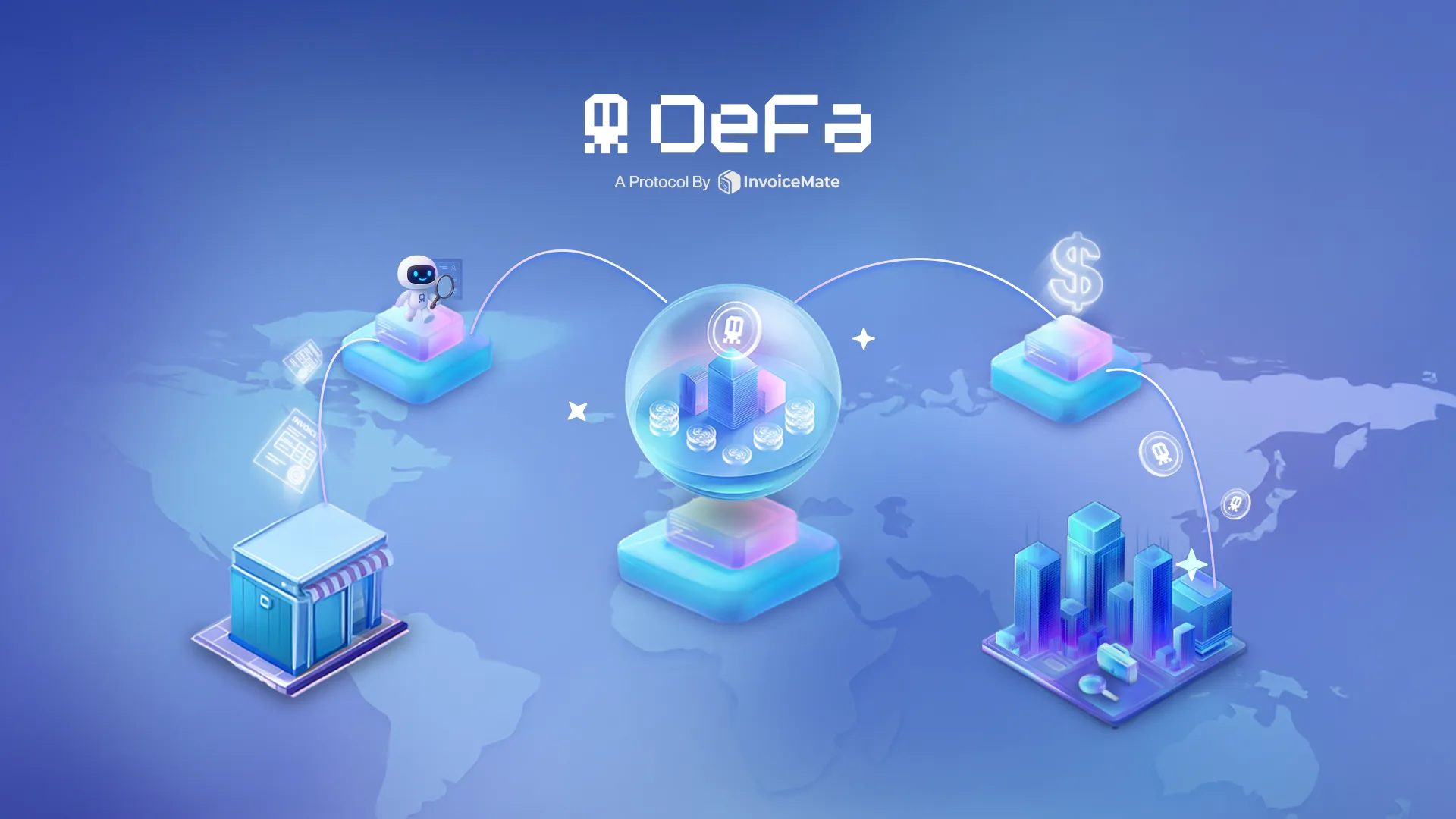
Key Benefits of KYI for Businesses, Financiers, and the Financial Ecosystem
For businesses
For financiers and liquidity providers
For the broader financial ecosystem
Why KYI is Key for Sustainable Yield
Many DeFi yield models rely on speculative assets, algorithmic incentives, or opaque mechanisms. When the underlying asset is unverified, risk increases, and yield stability suffers.
KYI changes this dynamic. Yield is backed by invoices whose authenticity, payment terms, and risk profiles are verified before financing. This creates not just higher confidence, but credible yield.
When investors participate in pools backed by KYI-verified invoices, they know exactly what they are funding: real invoices from real businesses.
Conclusion
KYI lays the foundation for a more trustworthy form of finance, where real business activity connects seamlessly with decentralized liquidity.
By verifying invoices before they enter onchain financing pools, KYI reduces risk, improves transparency, and supports sustainable yield generation. Together with DeFa, KYI bridges traditional invoice financing and DeFi, turning verified trade into a reliable onchain yield.
FAQ's
What is KYI (Know Your Invoice)?

KYI is InvoiceMate’s AI- and blockchain-powered system that verifies invoices before they are financed.
How does KYI prevent invoice fraud?
By detecting duplicates, validating transaction data, and ensuring invoices have not been previously financed.
How does KYI support DeFa?
KYI supplies verified, risk-scored invoices that DeFa tokenizes as secure real-world assets.
How do SMEs benefit from KYI?
They gain faster, fairer access to financing due to reduced lender risk.
What is KYI in invoice financing?
KYI is a verification framework that validates invoices before they are used for financing or tokenization.
What role does KYI play in DeFi private credit?
KYI supplies verified, risk-scored receivables that can be safely used in onchain private credit markets.
How do SMEs in the UAE benefit from KYI?
They gain faster access to working capital with reduced verification friction and fairer pricing.
What is real-world yield in invoice-based DeFi?
It refers to returns generated from real business cash flows rather than speculative crypto assets.
Is KYI limited to onchain financing?
No. KYI can support both traditional invoice financing and decentralized factoring models.
Muhammad
Ibrahim Salman
Author
Muhammad Ibrahim Salman is the Co-Founder and COO of DeFa by InvoiceMate, leading innovation at the intersection of fintech, blockchain, and decentralized finance (DeFi).
With expertise in digital strategy and financial transformation, he has driven key collaborations with MOHRE UAE and Al Gahf Group, advancing institutional-grade transparency in invoice financing and real-world asset (RWA) tokenization.
Passionate about financial inclusion and SME empowerment, Ibrahim focuses on creating sustainable, technology-driven solutions that connect traditional finance with decentralized ecosystems.

Related blogs


.webp)

.webp)
.webp)
.webp)
.avif)


